
Games vs. Training: A Parent-to-Parent Conversation About the Offseason
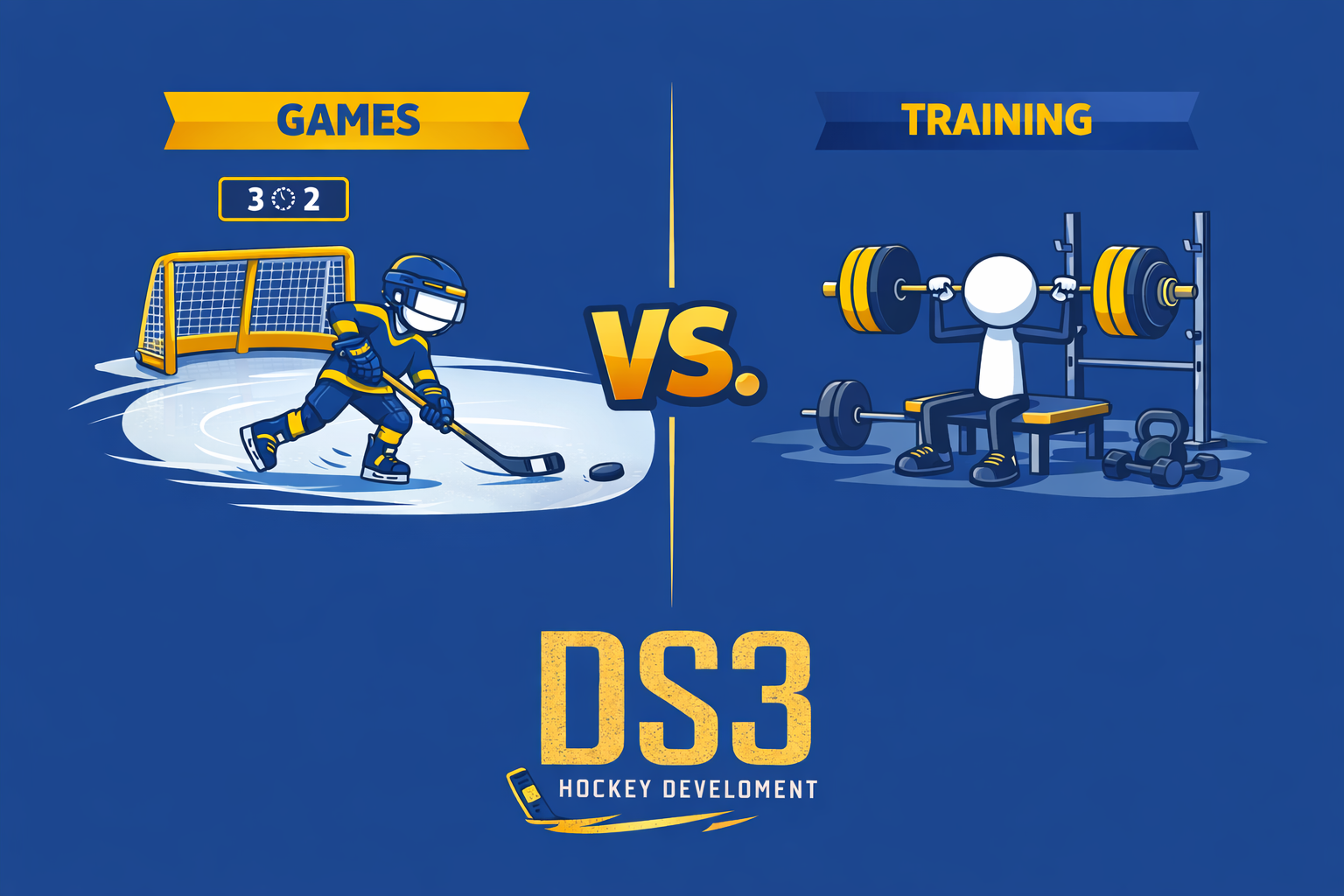
We are entering training season, not playing season , but the youth sports machine makes it incredibly hard for parents to know what actually matters.
As most teams in my area wrap up their seasons, I think it’s important to talk about what comes next. Not in a “you should do this” way — more in a “we’re all trying to navigate this together” way. Because entering the right phase of training now is what leads to real gains in the offseason.
I’ve been there myself — driving six hours one way to an unorganized, unregulated tournament, spending a lot of money so my kid ‘wouldn’t fall behind.’ And honestly, no kid is immune to that pressure.
But when I really sat back and reflected on those weekends — the 12 hours of driving, the cost, the time away from the rest of my family — I realized something. My kid took maybe 10-15 shots the entire weekend, carried the puck for a few minutes total, and didn’t work on any technique while doing it. It didn’t move the needle. And it certainly didn’t help him improve by the time fall came around.
What to Think About Heading Into the Offseason
🏒 Play another sport.
This helps kids move differently, prevent injuries by activating different muscle groups, play with new groups of kids, and experience different roles — sometimes being the best, sometimes not. Both are valuable.
🏒 Watch your player’s next game with a different lens. Not the score — their involvement:
🥅 How long was the puck on their stick?
🥅 How many shots did they take?
🥅 How many passes did they make?
🏒 Then compare that to a high‑quality training session.
Not a session with 30+ kids. A focused, intentional session where reps actually happen. Track the same stats and ask yourself:
🥅 Are my player’s shooting skills improving more from 3-5 shots in a game (that is a lot of shots), or 50–100 in a shooting session?
🥅 From 60 seconds of puck possession (again a lot) in a game or 20–30 minutes in a structured skill skate?
🏒 If you’re an older player, (13+), you need to be in the gym.
You will hit a ceiling on your speed or shot if you do not get stronger. We can absolutely make your player a more efficient skater/shooter, but if they aren’t strong enough, they won’t get faster or shoot harder. No amount of ice time will get your player faster if they are not strong enough. No other secret to it.
🏒 If players don’t get enough high‑quality reps improvement becomes difficult.
Over time, their ceiling becomes lower — not because they lack talent, but because they lack repetition and strength.
Practical Offseason Tips
👉 Pick 2–3 spring/summer tournaments that work for your family. Find a team with a dedicated coach who will make the experience enjoyable. We have local tournaments here, which is a huge benefit — no travel required which is awesome.
👉 Choose camps that fit your family first, then ask yourself the questions above about quality reps. Your player needs reps to improve.
👉 Find a good strength and conditioning program.
For younger players, this might simply mean air squats, push‑ups, pull‑ups, box jumps, etc. And you might even benefit from doing them with your kid ;) Older players you need to be hitting the weight room in order to see gains on the ice.
⚠️ I’m not saying all spring or summer tournaments are bad. They’re not — especially when they’re local :) There’s real value in game environments with a hands‑on coach and a good group of teammates. In moderation, they can be great.
🎯 But if your player is playing as many (or more) games in the spring and summer as they do in the winter, it’s worth stepping back and asking whether they’re actually improving by fall. Because if they’re on the ice that much — and it’s mostly games — it will be very difficult to see improvements.
Part 2 Coming Soon…We’ll explore what a high‑quality training session really looks like — and whether quantity is just as important as quality.