
What Is a High‑Quality Training Session?
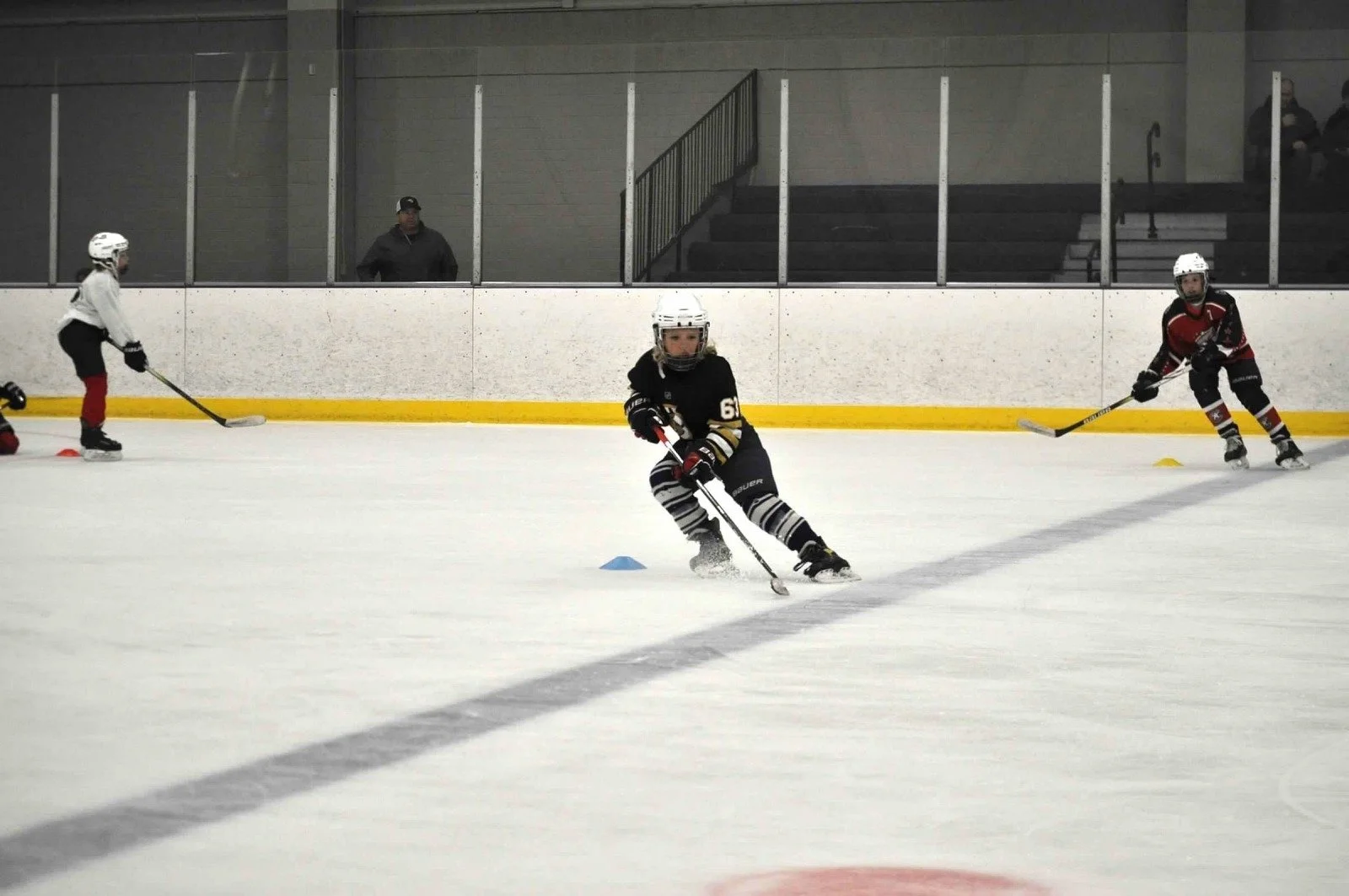
If you watched your kid's last practice from the stands, could you tell what skill they were actually working on?
In my last blog, we talked about a big offseason question: Is your player better off playing more games or focusing on training? With tournaments happening every weekend, it was a fun topic to unpack — and if you missed it, you can read it HERE.
This week, I want to build on that conversation. Just like tournaments, there are endless camp options all summer long. As parents, it can be tough to know which ones are actually worth the time, money, and energy — especially on a beautiful summer day when the lake is calling.
Here’s what I look for in a high‑quality training session, from both a coach and parent perspective.
🔢 1. Small Groups Matter
A camp can advertise a “1:6 coach‑to‑player ratio,” but if there are 40+ skaters on the ice, your player isn’t getting more reps — and reps are what drive improvement.
Think of it like golf: if you had to wait for 10–15 people to hit before you, you wouldn’t get better or have fun. Hockey works the same way.
Small groups with room to rep things out always lead to better development.
🤝 2. Coaches Who Connect
If we coaches aren’t building real connections with players, learning slows down fast.
Former NHL coach Jay Woodcroft said it best:
“We as coaches are being invited into a potentially life‑changing relationship.”
Kids learn from people who make them feel seen, supported, and respected. A high‑quality session has coaches who:
🏒Talk to the kids
🏒Learn names and give feedback
🏒Support every player, no matter their skill level
Connection always beats running drills on autopilot.
🧊 3. Coaches Who Can Demonstrate
A coach doesn’t need to have played pro — but they do need to demonstrate skills. Kids learn visually, and seeing the movement done correctly makes a huge difference.
I’ve spent the last 11 years teaching myself how to skate properly, and at 41, I’m still learning every day. Skating held me back as a player, which is why I’m so passionate about teaching the fundamentals the right way.
A coach who can show, explain, and model the skill gives your player a much better chance of learning it.
📅 4. Think About When Your Player Peaks
(For players roughly 13 and older)
A July skating camp can be great… but the improvement won’t last without some level of consistency. If a player is on the ice a bunch in June and July but then takes all of August and September off, some of that learned technique naturally fades.
For players 13 and older, a couple of intentional hours each week in the summer helps keep things familiar.
And just to be clear — this doesn’t mean players need to be on the ice all summer. It simply means that the few ice touches they do get should be intentional and deliberate. If your family takes a three‑week vacation? Totally normal. Summer is a big commitment, and getting to the rink isn’t always easy — so when you do get on the ice, make those touches meaningful.
🎯 The Bottom Line
Camps are a big investment — both financially and in family time. If you can find a balance that works for your family while choosing ice sessions that are intentional and focused on real skill improvement, your player will grow.
And remember — players don’t need to be on the ice all the time. For younger kids especially, outdoor play and natural movement in the summer can be even more beneficial. Neighborhood games, playground time, and unstructured play build coordination in ways that matter.
More isn’t always better. When choosing a camp, look for one your player enjoys — where they’re getting intentional coaching, meaningful reps, and skating off the ice with a smile on their face.
David
P.S. Bantam/15U + H.S. skating sessions are sold out. One spot left in Peewee/12U. Younger groups still open.
Check out our summer programs HERE.