
David Simoes David Simoes

Why Skating Lives Inside Every Hockey Skill

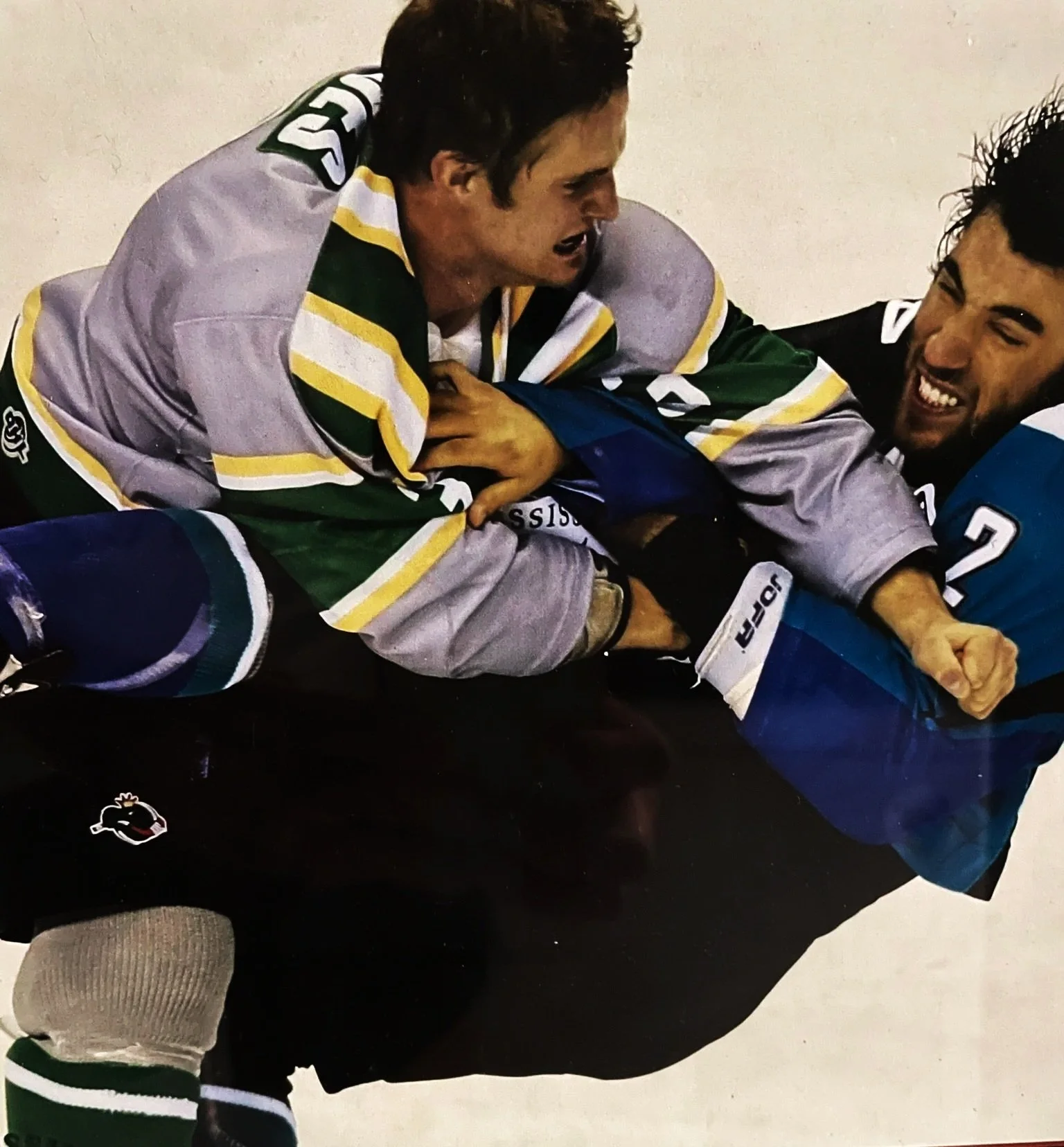
I was privileged to have a six-year professional hockey career, mostly in the Central Hockey League. I got there through competitiveness, hard work, and a willingness to do whatever it took. But if you'd watched me skate at the peak of my career, you probably would have thought - wow, that guy cannot skate. And honestly? I would have agreed with you. That's the part I've been reflecting on a lot lately, because it comes up in conversation more than you'd think, especially with old teammates. And the more I think about it, the more I realize I had it wrong for a long time.

Here's the truth: I wasn't a “bad” skater. I would rarely lose a puck race. I could step up and lay a big hit. Any time there was a puck to retrieve, I was first there. Those things got me to where I was. So was I really a bad skater?

No, but I was an ugly, inefficient one. I made up for everything I lacked technically through sheer work ethic and competitiveness. And to scouts or coaches watching from the stands, the optics of how I moved on the ice told a story I couldn't argue with. That label stuck with me throughout my career.

Here's what's weird about that: even when you're winning battles and puck races, if you look like a bad skater, people will believe it. Smooth, efficient skating has value beyond just getting from point A to point B. The optics matter. And that realization is a big part of why I am so passionate about teaching it now.

Skating Lives Inside Every Skill

As our training season rolls into summer, one thing keeps coming up in my coaching — skating isn't just one skill. It's the foundation underneath every skill. Take shooting. I've been learning a ton about shot development lately, and it keeps coming back to footwork. Without the right skating mechanics underneath your shot, you're leaving power and accuracy on the table — especially if you want to shoot in stride.

What about picking up pucks along the wall? Did you know that over 80% of an NHL game is played between the dots and the boards? That's roughly 48 minutes of a 60-minute game. Watch the NHL playoffs coming up next week — watch what the elite players do when they retrieve a puck off the wall. Their upper body rotation is driving their edges into the ice, loading up a powerful turn to collect that puck cleanly and protect it. That's not an accident. That's skating.

Deception? One of my favorites. A well-executed outside edge slide into a quick punch turn will shake a defender almost every single time — and the crazy part is, even when you know someone is going to do it, your brain still bites for the fake. That's how good edge control feels when it's real. But you can't fake your way through that move with bad edges. It requires genuine control.

Seeing It in Practice

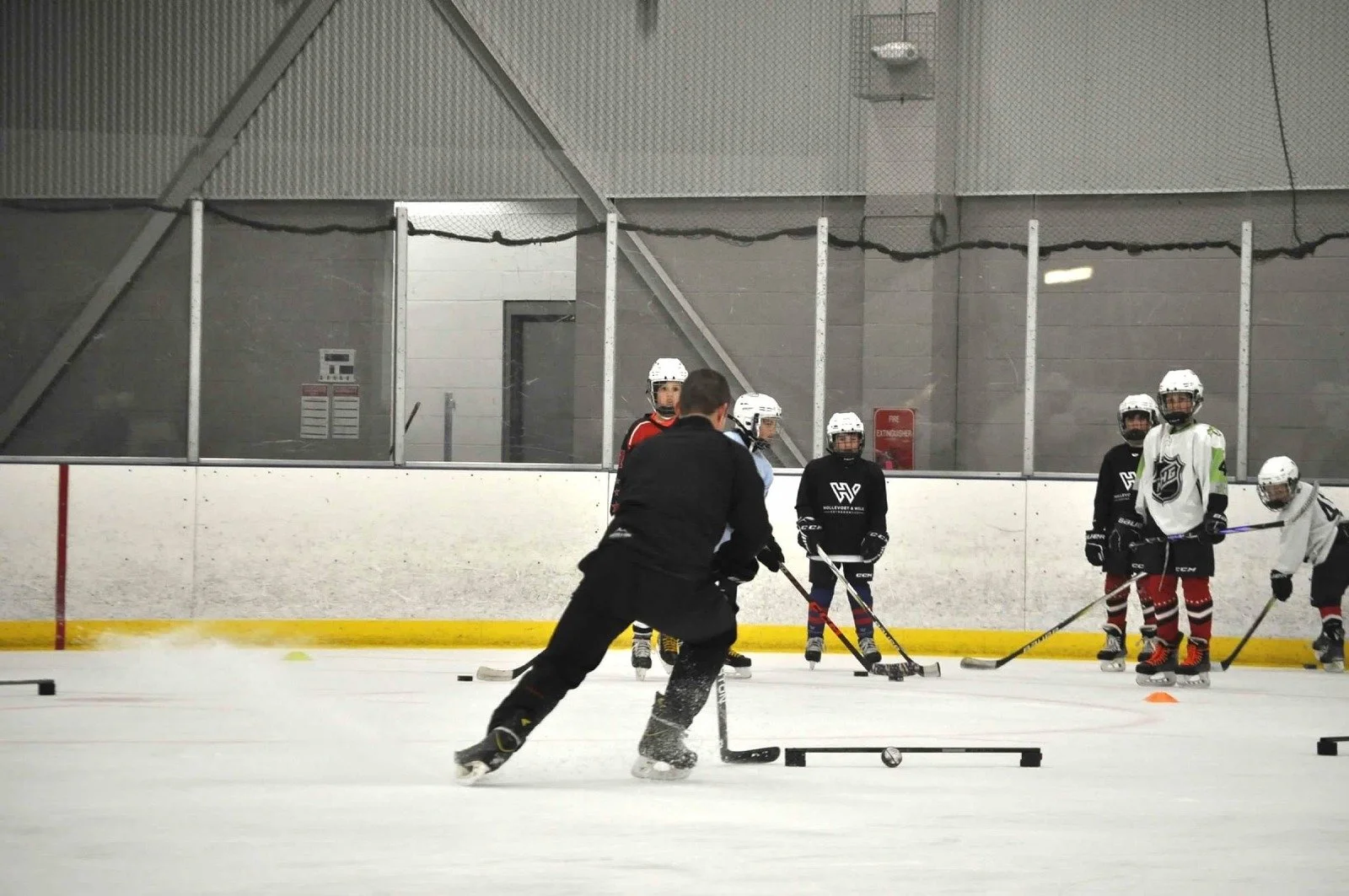
Here's an example of what this looks like in a real session.

First, our players warm up their skating specifically for a rim collection drill — priming their edges, their upper body rotation, their footwork mechanics before the puck even comes out.


Then we run the drill itself. The goal is simple: their brains should already be primed to use their edges and upper body rotation the way we just practiced. Watch how differently they move compared to players who haven't warmed up that way.

That's the whole idea. Skating isn't a separate thing we do before practice starts. It's woven into everything.

Thanks for reading — see you on the ice. 🏒

David Simoes — DS3 Hockey Development

Read More
David Simoes David Simoes

📱The New Hidden Skill📱

The Skill That Separates Players in 2026

As technology races forward and AI evolves by the day, I realized something while coaching our 14- and 15-year-old Bantam boys this season:

There’s a new skill that will separate players who develop quickly from those who stay stuck.

And unlike every other skill we train, this one requires not doing something and something that I am personally convinced can be a major separator in who will become a good play and who will become a great player.

👉 The skill: staying off your phone.

Why This Matters More Than Ever

One of the biggest influences on my coaching journey was Daniel Coyle’s The Talent Code. In it, he explains how myelin — the fatty insulation that wraps around neurons — grows through deep, deliberate, focused practice.

More myelin = faster, cleaner, more efficient neural firing.

As Coyle says:

“To be great at something is to be well myelinated.”

But here’s the catch: You cannot build myelin in a distracted state.

Phones vs. Focus

If we want deep focus — the kind that actually changes the brain — we have to get away from our phones. Players, coaches, parents… all of us.

This season made something painfully clear: Phones aren’t just devices anymore — they’re identities.

Asking players to put them away even one hour before a game feels like asking them to become a different person. It’s personal. It’s emotional. It’s uncomfortable.

And it’s not just kids. Just the other day, I bought bait at a gas station and the clerk rang me up while scrolling her phone, barely acknowledging I was there. This is the world our kids are growing up in. It’s normal and I genuinely feel for them.

The Competitive Advantage No One Talks About

So what’s the “new skill” players can capitalize on?

🔥 Who can master staying off their phone the longest — and at the right times.

If a player wants to squeeze every drop of development out of a training session, they need to arrive focused.

If they’re scrolling TikTok three minutes before stepping on the ice, their brain is not primed for learning. Their circuits aren’t ready to fire. Their myelin isn’t ready to grow.

There are great resources out there now on how to combat phone usage (See below). We need to teach ourselves, coaches & players the best way to come prepared for our skates, especially leading into the summer skill skates.

Skill Acquisition Requires:

🔁 repetition

🎯 attention

🧩 isolation of the neural circuit

🚫 zero distraction

When a player repeats a skating pattern with full attention, that circuit begins wrapping with myelin. When they’re mentally half-in, half-out, the process slows dramatically.

A Simple Challenge for Players

If you want an edge heading into tryouts, it starts long before the whistle blows.

📵 Put the phone away. • Leave it with your parents. • Leave it in the car. • You don’t need it in the locker room.

Let your brain do what it’s designed to do: build skill, build speed, build efficiency — build myelin.

The players who learn to protect their focus will develop faster than the ones who don’t.

Research Is Out There. This Is Not Made Up.

I’m not sitting around reading giant research papers — but the people who do read them keep finding the same thing: phones hurt focus. Here are three quick examples if you want to see for yourself:

1. Mental fatigue = slower decisions

Just 30 minutes of scrolling before activity leads to worse passing accuracy and slower decision‑making. Link: https://pubmed.ncbi.nlm.nih.gov/34404292/

2. Phones shrink your field of vision

Looking at a small screen trains your eyes into “tunnel vision,” which kills scanning and awareness. Link: https://www.researchgate.net/publication/5693319_The_effects_of_cell_phone_use_on_peripheral_vision

3. Your phone distracts you even when you’re not using it

Just having a phone in the room pulls attention away from the task. Link: https://www.mdpi.com/2254-9625/15/5/74

4. Hockey‑specific breakdown: Your phone is ruining your game

A hockey‑focused episode explaining how phone habits lower Hockey IQ, reaction time, and readiness. Link: https://www.thehockeyaddict.com/posts/rslint-goalie-science-your-phone-is-ruining-your-game-ft-larissa-mills-ep-119/

Great Hockey PDF slides from The Coaches Site, (Author I cannot find so I am sorry I am not giving credit):

Imagine courtesy of The Coaches Site “Why Your Smartphone is the Extra Player on the Ice (For the Other Team)

Imagine courtesy of The Coaches Site “Why Your Smartphone is the Extra Player on the Ice (For the Other Team)


Read More
David Simoes David Simoes

⭐What Is a High‑Quality Training Session⭐

In my last blog, we talked about a big offseason question: Is your player better off playing more games or focusing on training? With tournaments happening every weekend, it was a fun topic to unpack — and if you missed it, you can read it HERE.

This week, I want to build on that conversation. Just like tournaments, there are endless camp options all summer long. As parents, it can be tough to know which ones are actually worth the time, money, and energy — especially on a beautiful summer day when the lake is calling.

Here’s what I look for in a high‑quality training session, from both a coach and parent perspective.

🔢 1. Small Groups Matter
A camp can advertise a “1:6 coach‑to‑player ratio,” but if there are 40+ skaters on the ice, your player isn’t getting more reps — and reps are what drive improvement.

Think of it like golf: if you had to wait for 10–15 people to hit before you, you wouldn’t get better or have fun. Hockey works the same way.

Small groups with room to rep things out always lead to better development.

🤝 2. Coaches Who Connect
If we coaches aren’t building real connections with players, learning slows down fast.
Former NHL coach Jay Woodcroft said it best:

“We as coaches are being invited into a potentially life‑changing relationship.”

Kids learn from people who make them feel seen, supported, and respected. A high‑quality session has coaches who:
🏒Talk to the kids
🏒Learn names and give feedback
🏒Support every player, no matter their skill level

Connection always beats running drills on autopilot.

🧊 3. Coaches Who Can Demonstrate
A coach doesn’t need to have played pro — but they do need to demonstrate skills. Kids learn visually, and seeing the movement done correctly makes a huge difference.

I’ve spent the last 11 years teaching myself how to skate properly, and at 41, I’m still learning every day. Skating held me back as a player, which is why I’m so passionate about teaching the fundamentals the right way.

A coach who can show, explain, and model the skill gives your player a much better chance of learning it.

📅 4. Think About When Your Player Peaks
(For players roughly 13 and older)
A July skating camp can be great… but the improvement won’t last without some level of consistency. If a player is on the ice a bunch in June and July but then takes all of August and September off, some of that learned technique naturally fades.

For players 13 and older, a couple of intentional hours each week in the summer helps keep things familiar.

And just to be clear — this doesn’t mean players need to be on the ice all summer. It simply means that the few ice touches they do get should be intentional and deliberate. If your family takes a three‑week vacation? Totally normal. Summer is a big commitment, and getting to the rink isn’t always easy — so when you do get on the ice, make those touches meaningful.

🎯 The Bottom Line
Camps are a big investment — both financially and in family time. If you can find a balance that works for your family while choosing ice sessions that are intentional and focused on real skill improvement, your player will grow.

And remember — players don’t need to be on the ice all the time. For younger kids especially, outdoor play and natural movement in the summer can be even more beneficial. Neighborhood games, playground time, and unstructured play build coordination in ways that matter.

More isn’t always better. When choosing a camp, look for one your player enjoys — where they’re getting intentional coaching, meaningful reps, and skating off the ice with a smile on their face.

David Simoes — DS3 Hockey Development

P.S. Bantam/15U + H.S. skating sessions are sold out. One spot left in Peewee/12U. Younger groups still open.

Check out our summer programs HERE.

Read More
David Simoes David Simoes

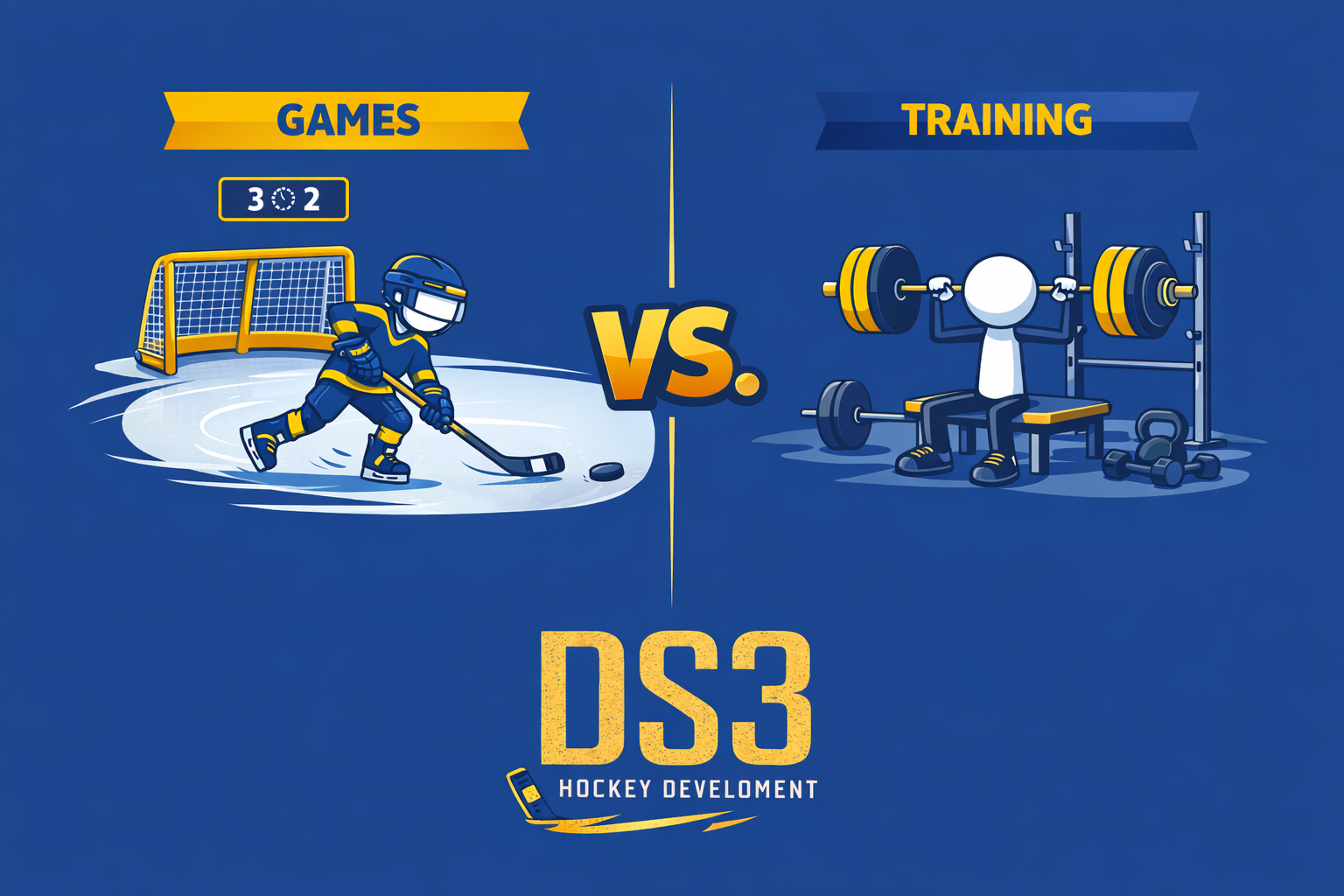
Games vs. Training: A Parent-to-Parent Conversation About the Offseason

As most teams in my area wrap up their seasons, I think it’s important to talk about what comes next. Not in a “you should do this” way — more in a “we’re all trying to navigate this together” way. Because entering the right phase of training now is what leads to real gains in the offseason.

I’ve been there myself — driving six hours one way to an unorganized, unregulated tournament, spending a lot of money so my kid ‘wouldn’t fall behind.’ And honestly, no kid is immune to that pressure.

But when I really sat back and reflected on those weekends — the 12 hours of driving, the cost, the time away from the rest of my family — I realized something. My kid took maybe 10-15 shots the entire weekend, carried the puck for a few minutes total, and didn’t work on any technique while doing it. It didn’t move the needle. And it certainly didn’t help him improve by the time fall came around.

We are entering training season, not playing season — but the youth sports machine makes it incredibly hard for parents to know what actually matters.

What to Think About Heading Into the Offseason

🏒 Play another sport.
This helps kids move differently, prevent injuries by activating different muscle groups, play with new groups of kids, and experience different roles — sometimes being the best, sometimes not. Both are valuable.

🏒 Watch your player’s next game with a different lens. Not the score — their involvement:
🥅 How long was the puck on their stick?
🥅 How many shots did they take?
🥅 How many passes did they make?

🏒 Then compare that to a high‑quality training session.
Not a session with 30+ kids. A focused, intentional session where reps actually happen. Track the same stats and ask yourself:
🥅 Are my player’s shooting skills improving more from 3-5 shots in a game (that is a lot of shots), or 50–100 in a shooting session?
🥅 From 60 seconds of puck possession (again a lot) in a game or 20–30 minutes in a structured skill skate?

🏒 If you’re an older player, (13+), you need to be in the gym.
You will hit a ceiling on your speed or shot if you do not get stronger. We can absolutely make your player a more efficient skater/shooter, but if they aren’t strong enough, they won’t get faster or shoot harder. No amount of ice time will get your player faster if they are not strong enough. No other secret to it.

🏒 If players don’t get enough high‑quality reps improvement becomes difficult.
Over time, their ceiling becomes lower — not because they lack talent, but because they lack repetition and strength.

Practical Offseason Tips

👉 Pick 2–3 spring/summer tournaments that work for your family. Find a team with a dedicated coach who will make the experience enjoyable. We have local tournaments here, which is a huge benefit — no travel required which is awesome.

👉 Choose camps that fit your family first, then ask yourself the questions above about quality reps. Your player needs reps to improve.

👉 Find a good strength and conditioning program.
For younger players, this might simply mean air squats, push‑ups, pull‑ups, box jumps, etc. And you might even benefit from doing them with your kid ;) Older players you need to be hitting the weight room in order to see gains on the ice.

⚠️ I’m not saying all spring or summer tournaments are bad. They’re not — especially when they’re local :) There’s real value in game environments with a hands‑on coach and a good group of teammates. In moderation, they can be great.

🎯 But if your player is playing as many (or more) games in the spring and summer as they do in the winter, it’s worth stepping back and asking whether they’re actually improving by fall. Because if they’re on the ice that much — and it’s mostly games — it will be very difficult to see improvements.

Part 2 Coming Soon

We’ll explore what a high‑quality training session really looks like — and whether quantity is just as important as quality.

P.S. Our technical skating is nearly full for our older groups already! 🚨 Sign up HERE for our summer programs. 🚨

Read More
David Simoes David Simoes

Building Better Coaches & People: My Weekend at TCS MN

Building Better Coaches & People: My Weekend at TCS MN

I feel extremely fortunate and privileged to have attended my second TCS conference this past weekend in St. Paul, MN. Being just a six-hour drive from Bismarck, the decision to make the trip was much easier this time around than back in June. I came into the weekend more prepared, more focused, and ready to absorb every crumb of wisdom from this incredible coaching community.

As someone originally from Vanderhoof, BC and now living in Bismarck for the past three years, learning more about Minnesota’s hockey culture was such a fun and educating experience.. I’m proud that North Dakota models its community-based hockey after Minnesota’s approach, and I hope what I learned this weekend helps me contribute to keeping our players local and thriving.

Top 3 Takeaways from TCS MN

1. Thank Your Spouse.

Troy Ward opened his incredible talk on practice development with a request to us coaches and something I have never heard before from a coach: “Thank your spouse.” It hit home. John Hynes shared how his wife encouraged him to take an AHL coaching job while raising a young family and renovating a house. Personally, my wife Mary is my biggest supporter. With five kids, she still encourages me to pursue my coaching goals and take on as much as I can. Makes me extremely thankful to have an amazing wife.

2. The Spud Pin Is the Real Deal.

If you’re not from the Midwest, you might not know about the massive Squirt (11U) tournament in Fargo each February. It’s not just great hockey—it’s pin trading central. Everyone wants the Moorhead Spuds pin. Moorhead Highschool Coach Jon Ammerman shared how Moorhead is innovating to retain top talent despite the rise of Tier 1 AAA hockey. Their training volume rivals Tier 1 programs, and their commitment to high school hockey is inspiring. To have the opportunity for your kid to stay home and play for their school is so neat and something that I just do admire being from Canada where high school hockey does not exist. I want to be apart of helping keep high school healthy in ND.

3. Bill Guerin Is Hilarious, and John Hynes Is a High Performer.

Both are elite, but Bill Guerin’s locker-room humor had the whole room laughing. He made us feel like teammates. John Hynes reminded us that coaching is a relationship business. He even hosts team grill-outs to build trust. It made me wonder—are other sports doing this? Maybe. But it makes me proud to be part of a game where relationships matter. Shoutout to Aaron Wilbur for asking some phenomenal questions to these two gentlemen.

Final Thought: Invest in Yourself

If you haven’t yet invested in yourself this season, take time to reflect and If you are able, take action to invest in yourself. Whether it’s The Coaches Site or another platform, dig into something that challenges and inspires you. It doesn’t even have to be hockey-specific—Jocko Willink changed how I see life and led me to resources like TCS with a new mindset. Podcasts, YouTube, books—we have so many free tools to become the best version of ourselves in today’s day and age so have fun with it. I promise you wont regret it.

Thank you to all the staff at The Coaches Site, the presenters, and the demo players. Another remarkable event indeed.


David Simoes - DS3 Hockey Development

www.ds3hockeydevelopment.com/blog

Read More
David Simoes David Simoes

From Practice to Performance: How Spaced Repetition Builds Game-Ready Skills

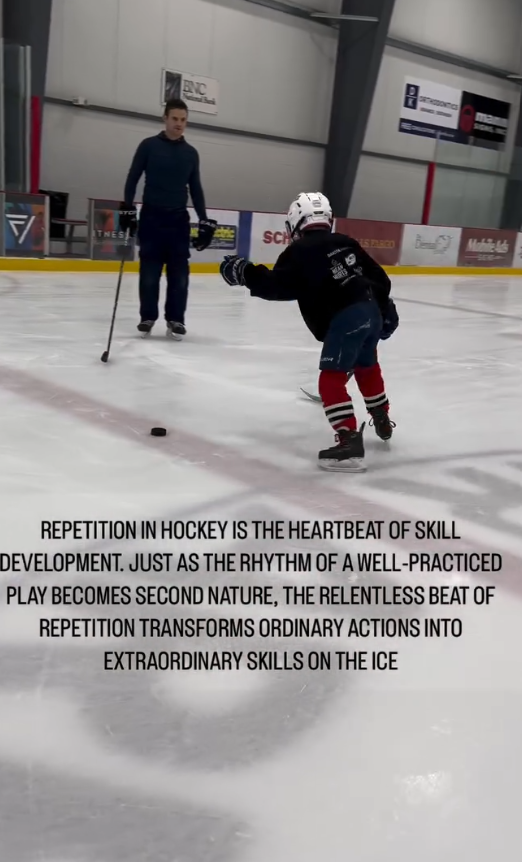
Image from an early IG post and one of my first sessions ever as DS3 https://www.instagram.com/reel/C2JY169t2i7/?igsh=MTl4ZndtOXRpMDduMw==

I’ve been diving into a fascinating book lately—The Science of Rapid Skill Acquisition by Peter Hollins—and it’s been challenging me in the best way. Not just mentally, as I try to retain what I’m learning, but practically, as I apply these concepts to my on-ice coaching sessions.

If you’re a coach—or a parent, for that matter—you’ve probably asked yourself:
“I just showed them how to do this… how did they already forget?”

In today’s world of constant digital stimulation, attention spans are shrinking fast. That makes memory retention more valuable than ever, especially when it comes to skill development. And that’s exactly why spaced repetition caught my attention.

Why Spaced Repetition Works

Hollins writes: “Spaced repetition spreads out practice sessions over time for better retention.”

As hockey coaches, our time with players is incredibly limited. At peak season, I might get just 3 hours out of 168 in a week to help them acquire meaningful skills. Assuming they sleep for 64 of those hours, that leaves us competing with roughly 100 hours of other input flooding their brains—much of it, unfortunately, coming from screens.

So the question becomes:
How do we make those 3–4 hours on the ice count for maximum retention and impact?

Building a Long-Term Skill Plan

I believe having a long-term plan is essential. That’s why I cap my groups at 16 players and structure programs to span 5–20 ice sessions over several weeks. With that kind of duration and consistency, coaches can drive real skill development.

Take rim collection, for example. If we intentionally revisit this skill across multiple sessions, retention improves dramatically. Here’s how that progression might look:

Rim Collection Progression (Spaced Repetition Format)

Session 1 – Technical Foundation

  • Emphasize full blade contact with the ice

  • Top hand and elbow away from the body for control

  • Use live video on the ice and NHL clips off the ice to reinforce technique

  • Introduce scanning and shoulder checks

Session 2 – Movement Integration

  • Add rim collection with cutbacks and lateral movement

  • Apply token pressure to simulate game-like reads

  • Reinforce pre-scans and body positioning

Session 3 – Reinforcement & Reps

  • Revisit Session 1 setup

  • Players now recognize the drill and skill focus—maximize reps

  • Encourage review of live on-ice video for self-assessment

Session 4 – Pressure Application

  • Full-speed rim collection under live forecheck pressure

  • If players struggle to gain possession, revert to Session 2 for more reps

  • Adjust based on skill level—more repetition is not a setback, it’s a strategy

Repetition Builds Automaticity

This cycle can be applied to almost any skill we’re trying to teach. When we use intentional spacing and progressive layering, players are far more likely to retain what we’re teaching.

By capping sessions at 16 players, we ensure each athlete gets meaningful reps throughout the ice time. That volume matters—because the more opportunities they have to perform the skill, the more likely they are to internalize it. Over time, they’ll be able to execute under pressure and do it automatically in game situations.

What’s Next at DS3 Hockey Hockey

We’ll be applying this spaced repetition approach starting Monday, August 25th, as part of our season prep at DS3 Hockey. Over the next six weeks, we’ll be on the ice for a total of 51 hours—an incredible opportunity for me to challenge what I’ve been learning and help our players retain skill.

I’m beyond excited to get back on the ice with the kids and help them prepare for their season using this framework. If you're curious about how it works in real time, follow along or reach out.

Let’s build game-ready skills that stick.

David Simoes - DS3 Hockey Development

Read More
David Simoes David Simoes

The Build: Lessons from a Sauna and the Ice.

How constructing a sauna taught me more about coaching than I expected

Over the past six weeks—wedged between ice sessions and my regular job—I’ve been hard at work building a sauna for my family of seven. My wife and I have dreamed of having one for years, and seeing it finally completed has been deeply satisfying. Even more rewarding? Sweating it out with our kids and neighbors, sharing laughs and stories in the warmth we built together.

Throughout the process, I kept thinking about how much this build reminded me of coaching hockey players. The parallels were everywhere. Here are three lessons that stood out:

🗣️ 1. What kind of voice will you be in your player’s head?

Like most DIYers, I dove into research—books, videos, forums. My most helpful resource? Microsoft Copilot, which often led me back to YouTube and one builder in particular: How to With Lech. If you’re planning a sauna build, I highly recommend him. His attention to detail and distinct accent stuck with me. I’d watch a video, then find myself narrating the task in my head… in Lech’s voice.

It made me wonder: What voice do my players hear when they’re trying a new skill? Is it kind? Clear? Encouraging?

Our voice as coaches can linger—positively or negatively. If you’re anything like me, that internal monologue matters. Let’s make sure it’s a good one.

Early framing stages with the kid’s signatures to be left for whoever take this sauna apart one day reminding me that everything and everyone has an ending.

🧑‍🤝‍🧑 2. Community Builds Everything

We’re lucky to live in an incredible neighborhood. I lost track of the hours spent on this sauna, but many were shared with my wife, kids, and neighbors. My wife and two neighborhood moms tackled doors, windows, and backsplash tiling. The dads helped frame and offered moral support when things went sideways.

It reminded me of coaching communities like The Coaches Site. Can we build great players without great people sharing their knowledge? Not a chance. Whether online or in person, sharing our talents is essential to The Build—on the ice or in the backyard.

🔧 3. Mistakes Make Us Better

I grew up in a steel fabrication shop. Wood? Far less forgiving. Cut a board ¼" short and there’s no welding over that gap. I preach mistake-making to my players all the time—but living it? That’s harder.

One day, I was struggling to align the chimney and let out a big yell. A neighbor boy came over:

“Mr. David, I just heard you yell—are you okay?”

Frustration gets the best of us. It made me think: How does a player feel when they’re stuck on a skill?

Do they need a break? A reset?

My wife would say, “Alright David, let’s leave it until tomorrow.” That pause helped. And next time I build a sauna—or coach a struggling player—I’ll be quicker to recognize when it’s time to step back.

First fire in the newly installed stove. I still had trim and benches to go. At this stage I felt done, but still work to do which was a little frustrating, but made me realize the last stretch is always the hardest to achieve our goals. Starting can be easy.

🧊 Final Thoughts

Building this sauna was incredible. Now we get to enjoy it with our family and neighbors—and that’s the real reward. Coaching is just as fulfilling. We’re building up young people, not just players. There will be mistakes, but the goal is growth.

So I’ll leave you with this:

  • 🗣️ What kind of voice will you be in your player’s head?

  • 🤝 What talent can you share with your coaching community?

  • 🛠️ Can you identify your mistakes, accept them, and apply those lessons to your next build?

Coaching is such a privilege isn’t it?

Thank you for reading.

David Simoes - DS3 Hockey Development

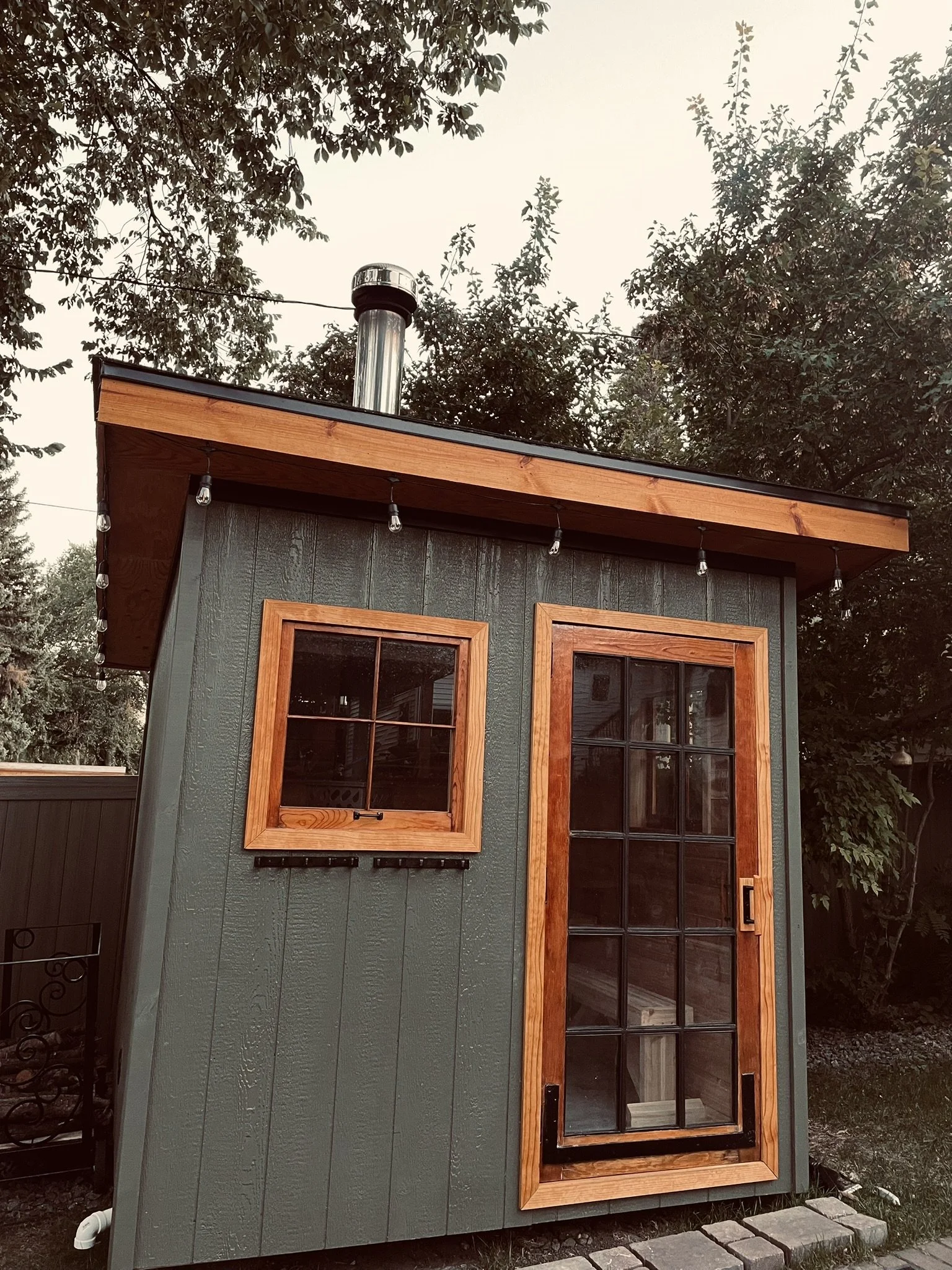
Finished product that I will need to maintain to keep in good working order. Nothing is ever a fully complete project.

Read More
David Simoes David Simoes

Hockey - Past - Present - Future

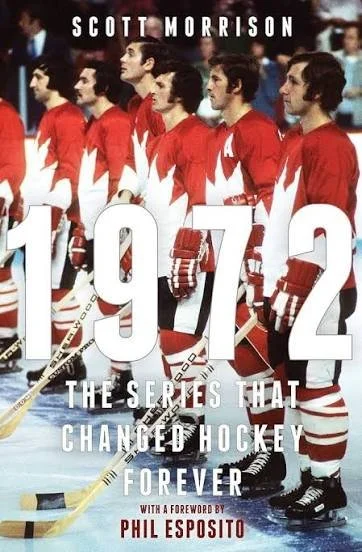
I can still remember pulling a book off the shelf at St. Joseph Elementary’s school library when I was about 10 years old. The cover stood out—a bold image from the legendary 1972 Summit Series showing Team Canada triumphing over the USSR. At that age, hockey consumed my imagination. I daydreamed of playing in the NHL, of donning a Team Canada jersey and representing my country.

Inside that book, I came across a quote—possibly from Phil Esposito—that read: “Every time I go on the ice I look around the room and tell myself I will be the hardest working guy on the ice.” I'm not sure those were his exact words, but the sentiment stuck with me through every stride of my playing career. Over time, those words evolved into something deeper: a personal promise not just to outwork others, but to honor the game each time I laced up.

Hockey, to me, is the most unique game on the planet. The equipment, the icy playing surface, the physical demands—it’s unlike any other sport. But what truly sets hockey apart is the people. The players, coaches, volunteers, and fans who pour their souls into this game make it the most beautiful sport there is. So, how do we honor that?

Past

Whether stepping onto a community rink or skating beneath the lights of the Bell Centre in Montreal, it’s a privilege to hit the ice. Before each session, I take a moment to think about everyone who came before us—from Maurice "Rocket" Richard to the community coach who spent 25 seasons shaping young lives with no fanfare. These are the individuals who paved the way, and honoring them starts with a mindset of gratitude. That perspective is humbling—and powerful.

Present

The game is evolving faster than ever. As coaches and players, dedicating ourselves to understanding the high-frequency situations in today’s hockey as Jack Han highlights in his amazing presentation on The Coaches Site help keep us focused on helping our players develop into the best player they can be.  Recognizing that somewhere out there, someone is pushing harder than us isn’t discouraging; it’s motivating. Every time I step on the ice, I am thankful for that opportunity and strive to make the most of it, not only for myself, but more importantly to all the players on the ice.

Future

Working primarily with youth, I often find myself wondering what these kids will go on to become. Which of them will be a future coach? A surgeon? A teacher? Some of the older ones already show leadership—I’ve even told a few they have “coach” written all over them. And truthfully, I better be nice to them… who knows, one day they might be my boss in some form!

But more than career paths, my hope is that these kids fall in love with the game deeply enough to want to give back. That they’ll grow up, start families, and pass that love along—by coaching their own kids and keeping the cycle going. That’s the vision I hold whenever I step onto the ice.

That Summit Series book made a lifelong impression on me. And while we coaches might not reach audiences the way Phil Esposito did, we still have the power to say things that shape a child’s future. If we do it right, our words and actions can become echoes in someone else’s journey—just like that book did for me.

David Simoes

DS3 Hockey Development

Read More
David Simoes David Simoes

TCS Live 2025 - Getting Out of my Comfort Zone

“Overcome.” That’s the word I walked away with from TCS Live
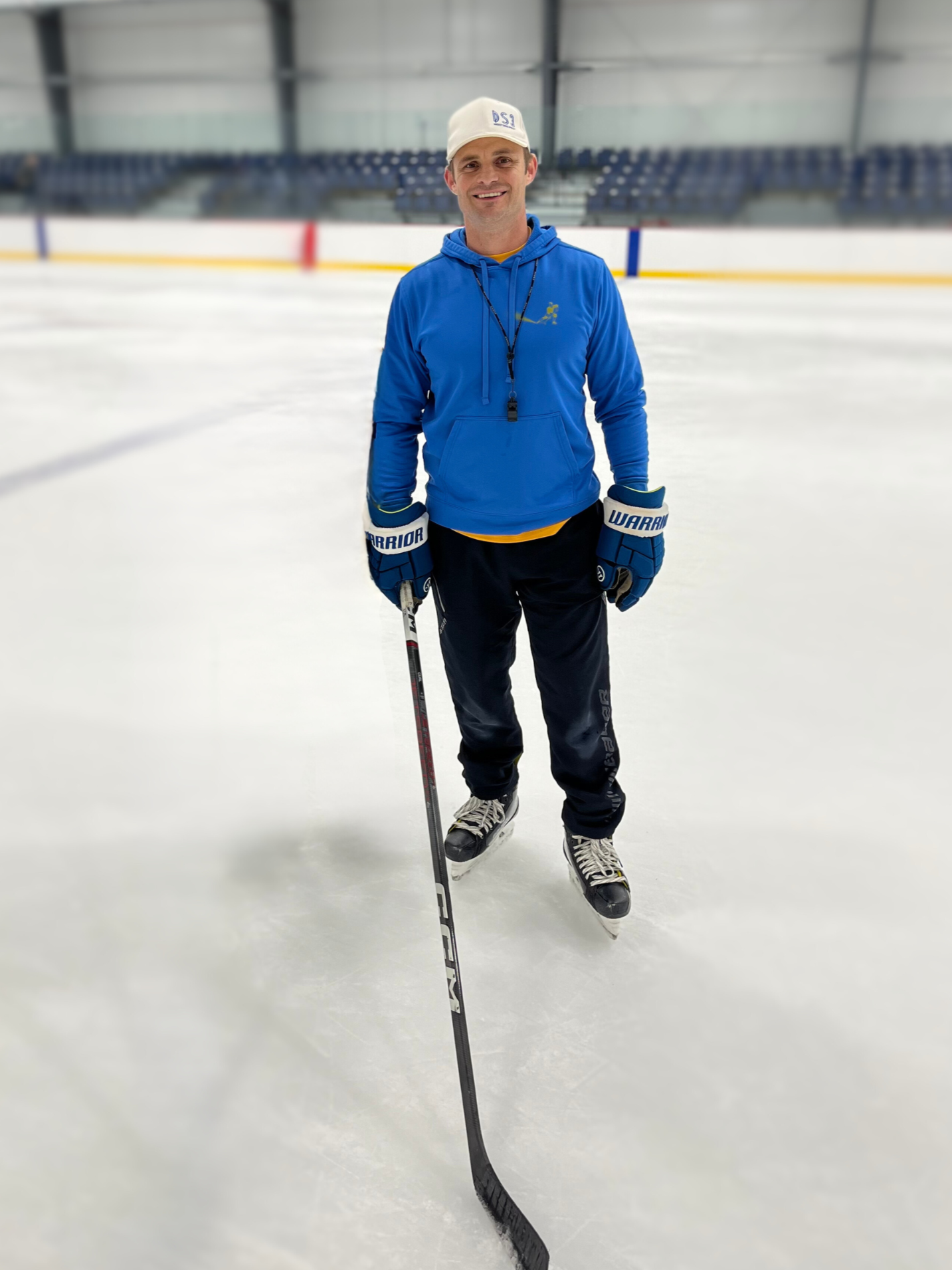
TCS Live - This has been on my bucket list for the past number of years, wanting to attend this amazing coaches conference. My wife fully encouraged me to sign up for this conference during the Black Friday sale and I did not argue so I gladly and eagerly signed up. As time grew closer to June 12th, my nerves started to grow with excited and fear. I tell my kids all the time that it is good to be nervous so I had to get them in check to make sure I was talking the talk!

I was asked by a couple of people what my biggest take away from the weekend was and I couldn’t really give a good answer as to what it was. I said the energy and the passion from all the coaches in the room, which was so evident walking through the doors at the Power Center on the beautiful University of Michigan campus. I said to someone else that is was bumping into old teammates or guys that I played and fought throughout my playing career. While both of those were absolutely incredible moments, they were not my biggest take away from these 3 amazing days.

Walking through the Detroit airport on my way home it did hit me. I was able to overcome some of my fears that when I thought about before the conference, made my heart beat quickly and was searching for excuses not to achieve the things I wanted to do.

  • Going to the Ryan Blank workshop was nerve-racking for me. I think I stared at the computer screen for 5 minutes after leaving the registration page in an open tab for a few days contemplating signing up, before finally clicking the register button. I sat at a table with 4 other amazing coaches who were extremely welcoming and I was able to share an group highlight while also participating in group discussion. Not scary to say the least. Only growth happened there.

  • Going up to Daniel Broberg and shaking his hand to thank him for sharing his knowledge with us coaches in his 7 part skating course on TCS which I have implemented many of what Daniel teaches in that course, in my skating sessions this summer. I thanked him for being a mentor to me, both in his teaching and for his clear passion of the game. Of course he was gracious and kind, taking time to speak with me.

  • Being able to thank The Coaches Site Founder, Aaron Wilber, for having the vision of this site and conference, which has literally been life changing for me, not only in hockey, but in leadership and life. Stopping Aaron was not easy for me and I passed him more than once, finding the excuse that he would be too busy to talk, before actually gathering the nerves to do it. No surprise that he gave me my full attention.

  • Meeting Jill Plandoski, another TCS mentor on skating, to thank her for sharing her work with us and teaching me about skating mechanics that I use at every skating session. Again, very nervous to stop her, but the next thing I knew after asking her about how to teach kick backs, she had her ipad out showing me different drills and how the skating translates to real game clips. Talk about leadership and humility.

  • Then listening to the last talk of the day with Brad Larsen. Learning he is a man of Faith with resonates with me in a big way being a man of faith myself. Then gathering the courage to ask him a live question infront of the whole crowd on a live podcast. I missed catching the green cube, but was able to ask him a question which he thought about and gave me a great answer.

Overcome, was the word that I picked at the Ryan Blank workshop to use for this year. I want to overcome my fear of failure, put myself out there more, and if what I am trying does not work with my coaching, hockey business, or life, then  I know it will not be the worst thing in the world if it doesn’t work out. Fear of failure, why do we fear something that happens to everyone, almost on a daily basis?

So, that is my take away from the past 3 days. Because my beautiful wife encouraged me to take time away from our family to attend this conference, I was able to grow to my trust my abilities. I am already looking forward to the next time I am able to attend something like this and be a more active participant and leader like so many coaches were to me this weekend.

Thank you to all the staff at The Coaches Site for putting these 3 days together for us all. Thank you to the presenters for the preparation you put in and your willingness to share your knowledge with all of us coaches. Most of all, thank you hockey, for being able to bring close to 500 people together. We have the best game in the world and these 3 days were proof of that.

David Simoes - DS3 Hockey Development

Read More
David Simoes David Simoes

What Hockey Means to Me

but hockey does something to people that is almost magical.

Hockey… just typing that word stirs emotions deep within my soul. What hockey means to me is far more than what I could ever put into words, so where do I even begin to express what this beautiful game means to me?

My dad was born in Portugal and moved to Canada when he was 13 years old. His father picked him, his three brothers, and his mom up at the airport in Edmonton, AB, in the dead of a cold Canadian winter, driving them all in a five-seat Chevy Camaro in 1973. They traveled eight hours to Prince George, BC, where they would settle. My mom was born in the tiny, nearly unoccupied town of Likely, BC, to parents who had come to Canada, escaping post-WWII Germany with only a few dollars in their pockets, searching for a better life in a prosperous nation. My love for this game was not generational by any means.

I start with that because, ever since I can remember, I have had a dream—a dream to play in the NHL and to be involved in hockey for the rest of my life. Why did this game captivate me so much that, at the age of 40, I still imagine myself being involved at the game's highest level in some capacity? Dreaming is in my blood—that is evident in both of my parents—but hockey does something to people that is almost magical.

Hockey is just a beautiful game. The sound of pucks hitting players' sticks during practice, the calls for a pass, the rhythm of play. The smell of each different arena, especially the ones from childhood. I can still walk into the Vanderhoof, BC, arena, breathe in that arena air, and almost be transported back to when I was a young boy playing this beautiful game. Each arena has its own unique scent and feel.

The feeling of your blades on the ice—scraping, sliding, gliding. Making something external, steel blades, become part of your body. We almost turn into superheroes, wearing a special outfit. I mean, what other sport has steel blades 3 mm thick, where players are moving anywhere from 10 to 20 mph around a frozen sheet of ice, smacking a 3-inch diameter rubber object, crashing into boards with plexiglassth? I think about that often and laugh at the uniqueness of our beautiful game.

So much more can be said about the game itself and its uniqueness, but what is truly special about hockey is what it can do to a person's soul and the endless opportunities it provides.

  • It’s the fierce competitiveness—sticks smashing, fists flying, words exchanged—only to find appreciation for your opponent's willingness to battle and say, "Good work."

  • It’s the bumps and bruises that hockey players wear like a badge of honor. As Dave King would say, it’s about “loose pucks & ice bags.”

  • It’s forgiving. Hockey moves too fast to dwell on mistakes. There are too many of them during a game to hold onto. Make a mistake, correct, repeat. Hockey begs you to play.

  • It’s the crushing feeling of a hard-fought loss, knowing every one of your teammates feels the exact same way. Like the Vernon Vipers’ 2007 RBC Championship team motto, "23 Hearts, One Beat"— hockey players move in unison for the betterment of the team.

  • It’s the peaceful feeling of stepping onto the ice for a 6:00 AM skate, hearing only the arena lights humming, the nets waiting for the fresh sheet to be carved up. So, so peaceful and calming.

I have been around many different athletes and sports teams, and I can say without a doubt—hockey people, whether players, coaches, or managers, have no greater love for their sport. How could someone not be completely in love with this beautiful game?

Just watch the NHL playoffs going on right now—Jets tying Game 7 with 1.7 seconds left and winning in OT, VGK scoring with 0.4 seconds left in Game 3 of round 2—epic, epic sports moments. Look at the emotion in those players. Watch their interviews—it’s all about the team, never about themselves.

Man, I just love this beautiful game. Every time I step onto the ice, I try to honor everyone who has skated before me—past, present, and future. I hope I can continue to show this game how much I love it for many more years to come. 

Read More